Life is strange and funny, and that’s just how Jill Arteche likes it
The visual artist prefers to view life through a playful and colorful lens
By September Grace Mahino
August 08, 2025
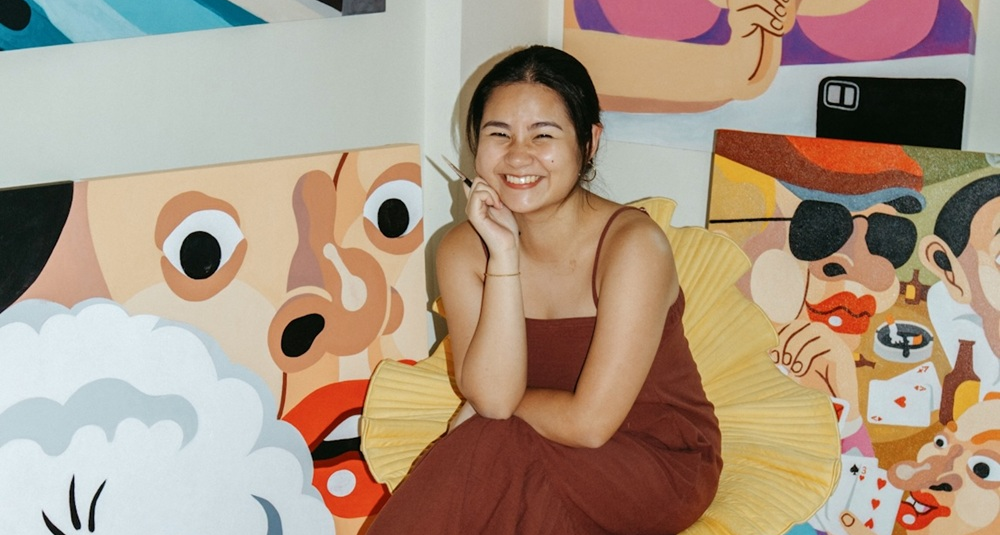
Artist and illustrator Jill Arteche, 29, has been observing and drawing people for years. When asked what art has taught her about human nature, she says, “That people are weird.” She laughs a bit before continuing. “That we’re weird beings just trying to connect with each other.”
It’s a simplistic answer that nevertheless rings true. Under Arteche’s hands, people materialize on paper, canvas, or a digital screen with cartoonish expressions and proportions. Yet somehow, their exaggerated features feel authentic to the messiness of the human experience, even when they’re just doing everyday things: cooking, eating, gossiping, playing, picking their nose.
A caricature captures the essence of a portrait subject, making them instantly recognizable even with just a few strokes. Arteche isn’t a caricaturist, but her illustrations of people elicit the same sense of familiarity, of recognizing the subject, or at least what they are going through. She credits her ability to be sensitive to the nuances of facial expressions and gestures to a drawing class she took as a Fine Arts - Information Design sophomore at the Ateneo de Manila University. “It was an everyday practice,” she says. “It didn’t matter if it was a portrait or scenery. We just had to produce a drawing at the end of the day.” In her cozy studio, which offers a bird’s-eye view of her alma mater, her sketchbooks from her college days are neatly kept in a box, their pages documenting Arteche’s growth in terms of artistic technique as well as the humorous and affectionate way she views people and the mundanity of life.
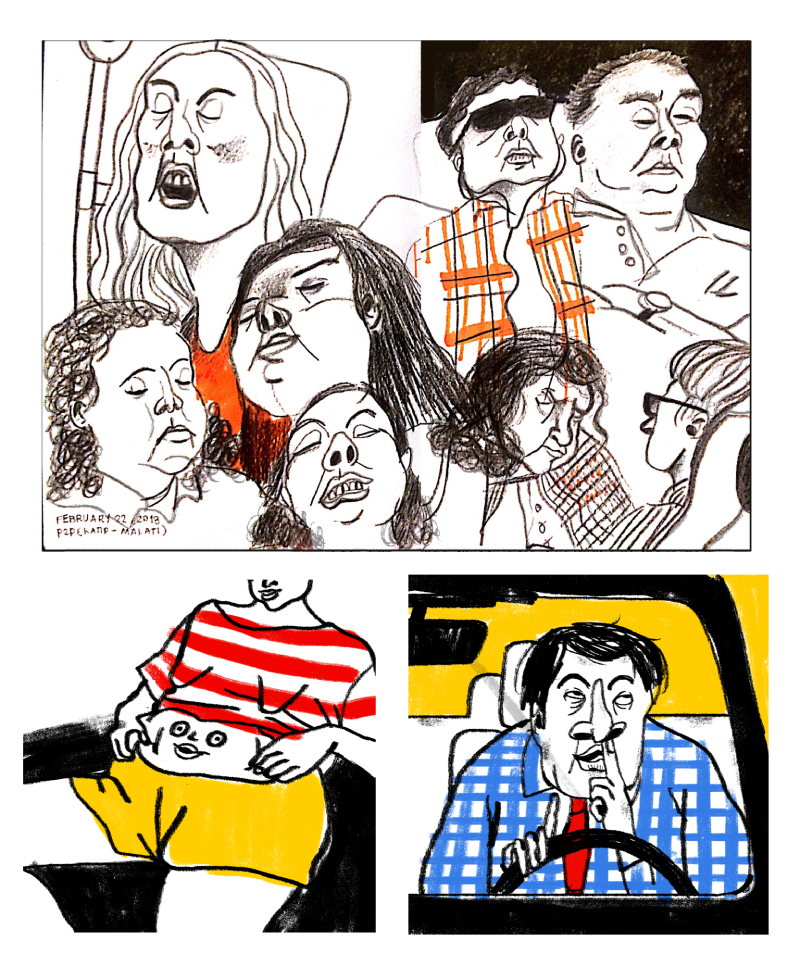
Pages from Jill Arteche’s 2018 visual diary: illustrations of people sleeping during their commute, letting their gut hang out, and picking their nose while driving.
As for her signature style of distorting features, she says she started developing it after a, yes, caricaturist made her a portrait. “This was also back in college, while I was on a trip abroad. He exaggerated the mole on my face, and instead of offending me, it made me laugh,” she recalls. Seeing an unusual depiction of her visage inspired her to explore what creative exaggerations can also do for her illustrations, how they can be used to highlight specific facial features or aspects of people’s body language. “It’s a way of putting meaning and emphasis on something—like their feelings or personality traits.”
Her considerable commercial success and rising stock in the fine arts scene prove that her artistic perspective resonates with a lot of people. Arteche’s illustrations have been featured in print, on product packaging, in planners and calendars, on an album cover, on walls, and even on the floor of basketball courts. She has also had three solo shows and is represented by the DF Art Agency. CREATEPhilippines dropped by her Quezon City studio to chat (and giggle) about the necessity of remaining true to her artistic vision and finding the right people—clients and collaborators alike—in the process.
Your works inspire laughter or, at the very least, elicit smiles because of the sense of humor in them. What do you personally find funny?
I find life funny, in general. I mean, in context, it can be funny. Just the most random and ordinary things, like hearing people laugh, seeing my dog rolling on the carpet, weird memes on the internet…even my own problems can make me laugh. I think that’s just my way of coping with them, of making light of things I cannot control.
Before becoming a full-time freelance artist, you worked for a couple of years as a graphic designer for different agencies. Since you have a very specific perspective, how did you balance handling client requirements and staying true to your artistry?
Back then, it was difficult; it was a constant negotiation. But I soon found myself doing my own thing on the side [as a way to cope]. Agency work helped me see the importance of organization, structure, collaboration, and teamwork. It also taught me to be intentional with my work—my personal work, which is what makes me happy.
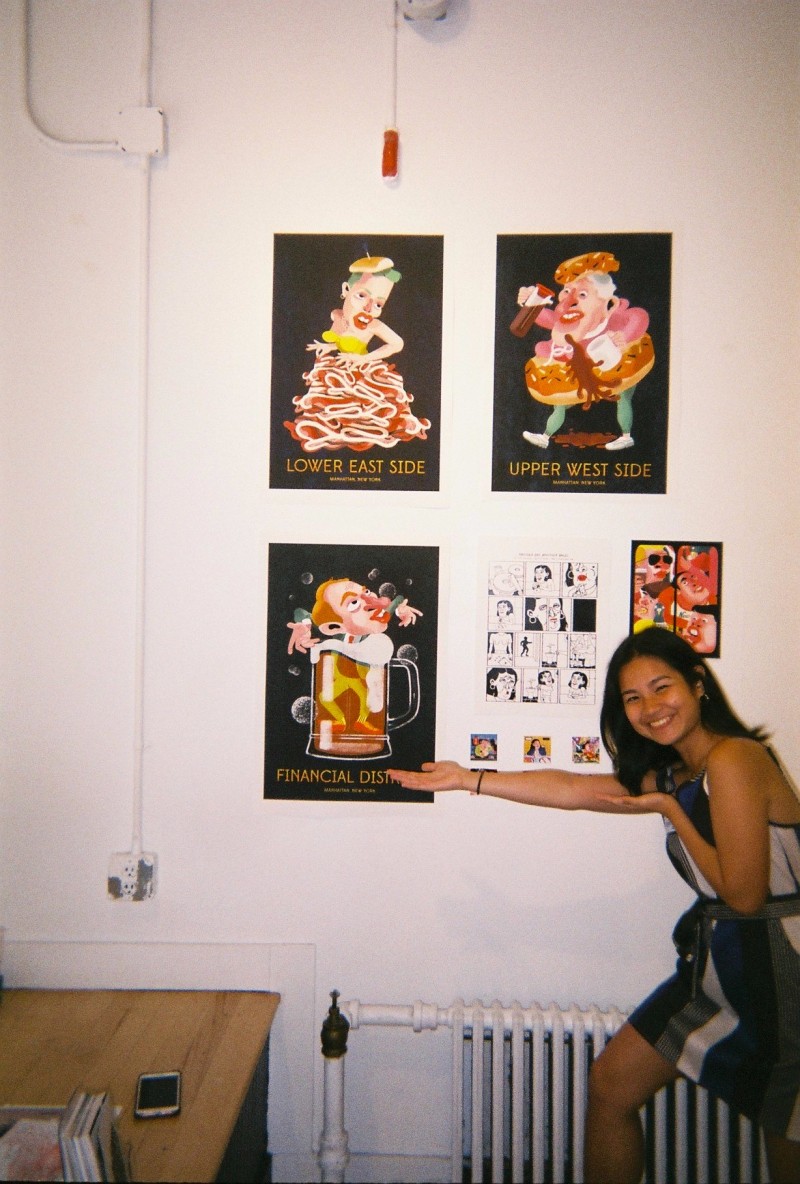
You also took an illustration and visual storytelling residency at the School of Visual Arts in New York in 2019. How did studying and living in a totally different environment enhance your creative vision?
Honestly, I was on creative autopilot before leaving for New York. I had just quit my job then, plus I had also realized that I wasn’t really into design. Immersing myself in an unfamiliar place helped me rediscover myself and find the direction I wanted to move in terms of my career. Living in New York also helped me become more confident in my work.
After New York, you fully embraced working as a freelancer. Did you have a plan on how to get your name out there and find clients? Like, did you pitch yourself to them?
No, I’ve never liked pitching myself to clients (laughs). I’d rather invest my time in creating and posting my works online, like on my website and social media. That’s important, I think, to let your work speak for you. I guess I was just very loud online, constantly posting my stuff. Some of my biggest projects, like the ones I did with Canva and Nike, were the result of that. A lot of clients have reached out to me through Instagram and email.
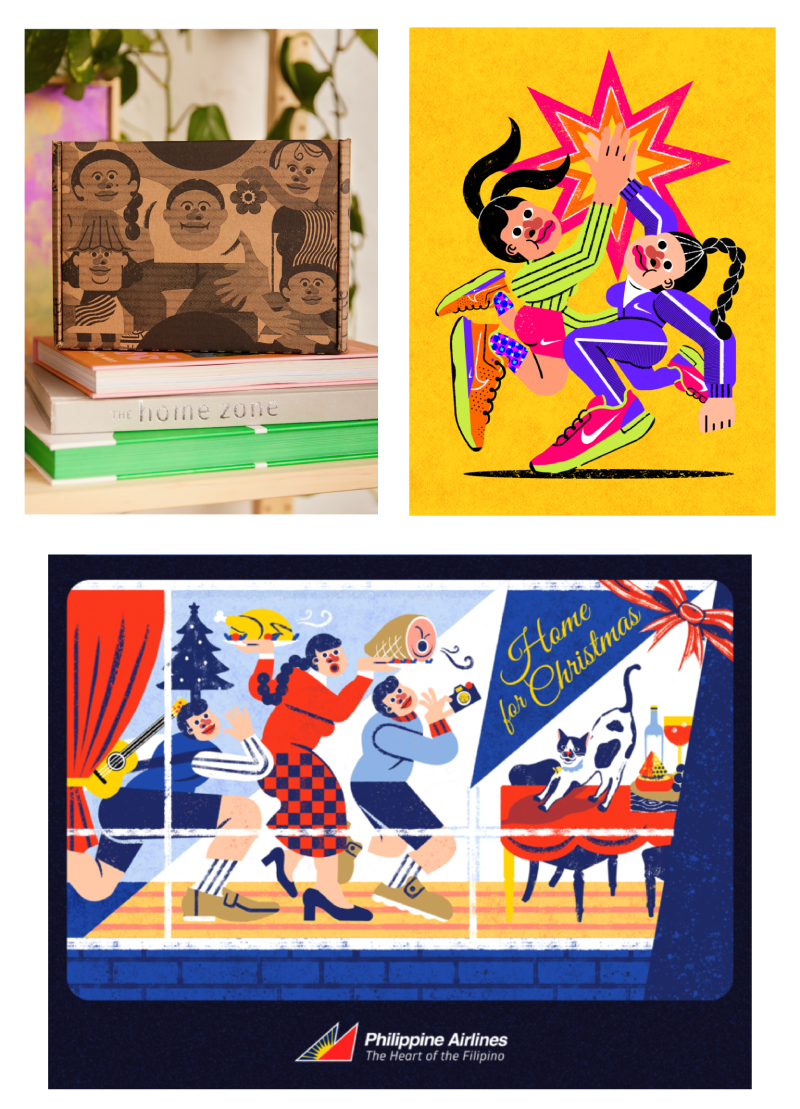
Arteche has worked with a few international clients such as Canva (top left), Nike (top right), and Philippine Airlines. The first two are actually listed in her secret manifestation list of dream collaborators.
I also realized early on that having my own style is very important in order to stand out. I just did a lot of work and built my portfolio so I have something to show clients: “This is who I am, this is what I do, this is what I can do.”
Speaking of big projects, you’ve worked with Nike twice already. How did that come about?
The first project (for Nike By You, in collaboration with Girls Got Game) happened so suddenly. They just messaged me on Instagram. I guess it really helped that I was really loud on social media, like, “Hi! I want to work with big clients.” I have my manifestation list of dream clients, and Nike was one of them. That collaboration was really my big break, and it happened in 2021.
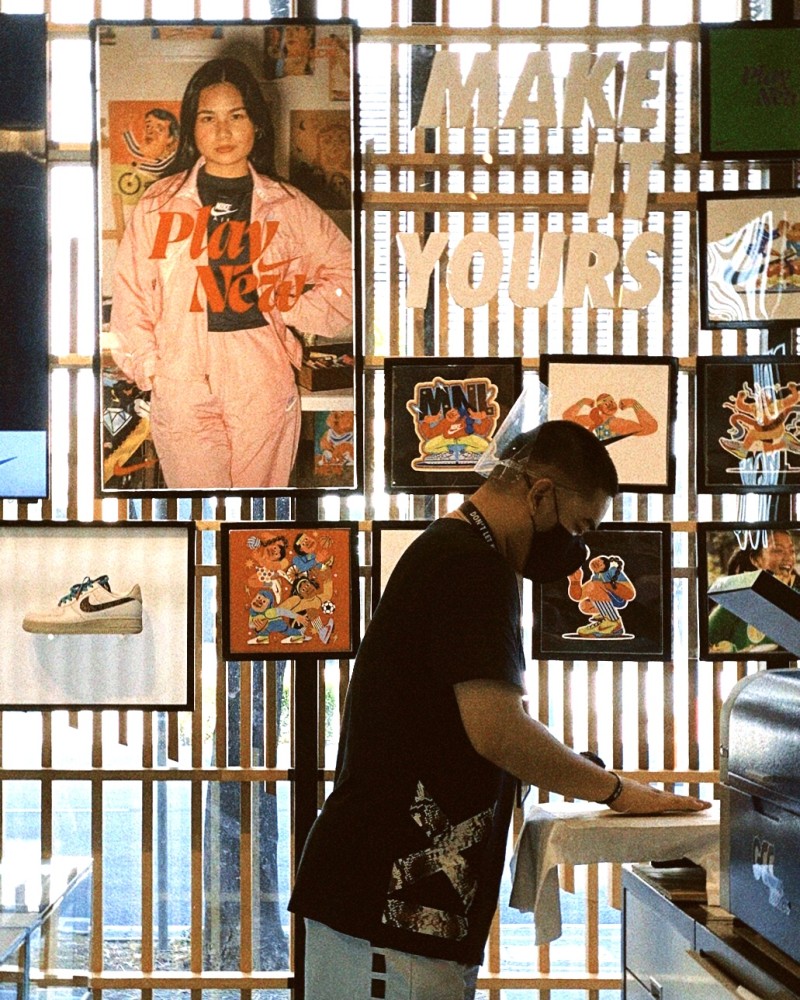
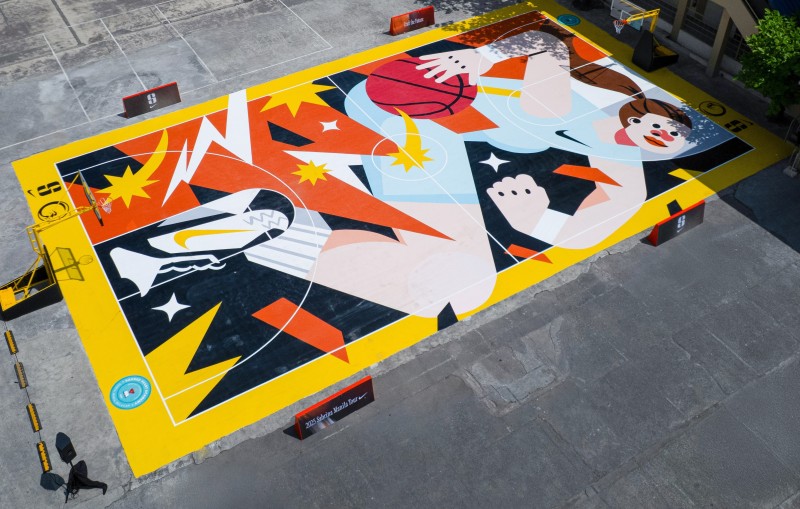
Have you noticed any similarities between your roster of clients, both the previous and current ones?
Most of the clients I have worked with share the same values as me, specifically putting importance on playfulness, colors, and storytelling—putting the focus on humans, in short, but in an unconventional way, if that makes sense. Having similar values is important for me because it just makes the whole collaboration natural and easier.
What advice can you give to artists who are just starting out and want to work as freelancers?
I think it’s important for a fresh graduate to not go and work as a freelancer immediately. Well, it could work out differently for everyone, but working in a corporate setting kind of helped me build my finances, which gave me a bit of a financial safety net once I became a freelancer. It also helped me know how to balance my time. I mean, I don’t really get to apply that kind of time management now (laughs), but at least I know the benefit of having that. Basically, it’s good to learn different perspectives on how to get things done. You get to see that your way, or the way you’ve been used to, isn’t the only one. That’s how you find out what really works for you.
How do you develop a healthy ego as an artist? How can a freelance artist maintain their integrity so they avoid doing just about any project or following every client's demand out of fear of losing work?
I’m not really the best person to ask, but a good starting point is to learn how to love your [body of] work: both the highs and lows, your best works and the not-so-best ones. With me, I just enjoy the process and trust it. Sometimes, you do get swayed by a client’s demands. But you have to love your own work, your own style. It’s not about having to compromise, I think. I’m at a point where it’s no longer about wanting to compromise [when a client wants a different style or aesthetic]. It’s about being able to put my own identity, my stamp, on whatever I do. That has become a way for me to stand for myself and take up space in the world.
My favorite advice to give to artists is, “You do you.” Focus on creating original and honest work that shows who you are as an artist. Once you do that, everything will follow. The right people and clients will find you.
What do you do to refresh your creativity?
I watch cartoons and other things on Netflix; my all-time favorite is Mr. Bean. I’m also very fond of animals, especially strays, so I’ve started volunteering whenever I can at the Philippine Animal Welfare Society. I’ve also begun gardening, and I actually dream of harvesting chili peppers and bottling my own sauce (laughs). Basta, it’s important that I just don’t do art and illustration all the time. It’s important to find other things to do, too. Working full-time as an artist can really make your art feel more like a business, which can lead to burnout.
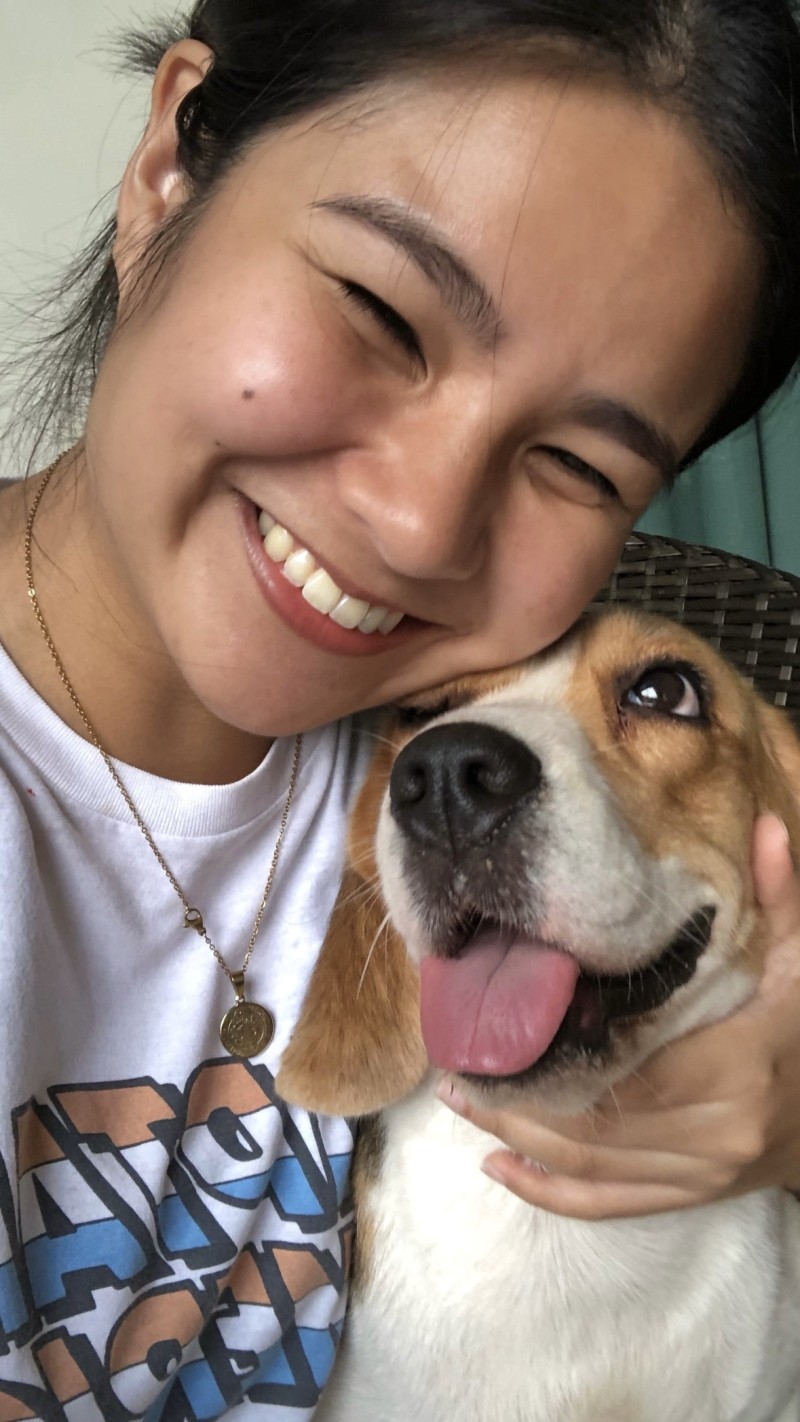
IN PHOTO: Arteche, pictured here with her late dog, Bailey, is a big supporter of animal rights and welfare.
I’m also doing more personal work. Since going full-time in freelancing, I haven’t had much time to do art for myself, so I’m excited to get back to that.
Is there a difference in how you approach fine art and commercial work?
There’s not much of a difference for me. I approach work pretty much the same, whether it’s for an art show or client work. The process is the same: brainstorming, conceptualizing, and then executing, which is the part of the process that is actually therapeutic for me. Then I submit what I’ve done, see the people’s or the client’s reaction, and the feeling I get is the same. I view these different audiences similarly. If they give feedback, I take that. If they laugh or smile when seeing my work, that makes me feel good.
Now that you’re approaching your 30s, what legacy do you envision building as a working artist?
I can’t really say, we’ll have to find out. Right now, I just want to focus on making more art and illustrations that feel more familiar, but I’m open to whatever comes my way. If I’m being honest, though, I want to use my art as a tool to make more money so I can help more animals. That’s a legacy I’d be really proud of.
But if you were given a project where there’s no limit in terms of budget and execution, what would that be?
I want big installations of my work in malls, like gigantic installations showing everyday people walking their dogs, gardening…just everyday stuff.
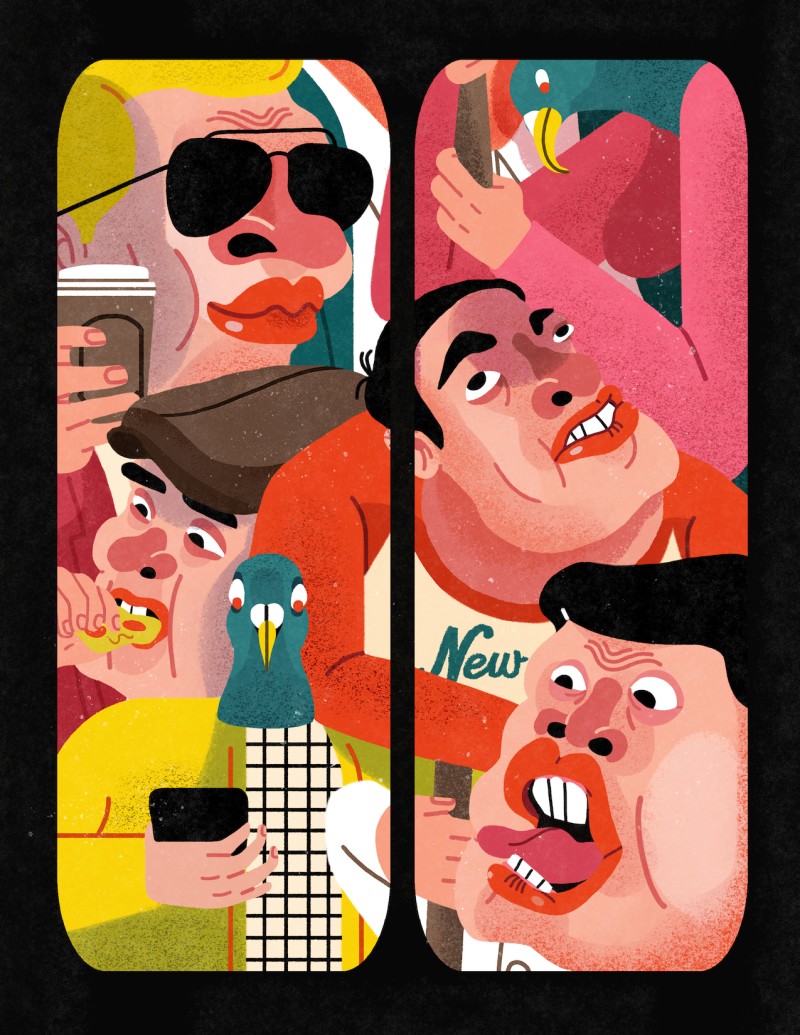
What is it about the mundane that inspires you?
I feel like the mundane stuff is often the moments we overlook. But when we pay attention to the smallest details, we gain a really different perspective. In my case, that perspective becomes the foundation of my work. Then I just put a touch of humor, and that adds something extraordinary to an ordinary scene.
***
Learn more about Jill Arteche on her Directory Profile and follow her on Instagram. All images in this story are courtesy of Jill Arteche.
Want to connect with Jill? Get in touch by filling out the Connect with a Creative form. Want to be part of our creative community and have the chance to be featured on CREATEPhilippines? Sign up and register for our Directory of Creatives here. Join our Viber community, too, and follow us on Instagram, Facebook, X, and LinkedIn to be updated on the creative events that we’re promoting.