
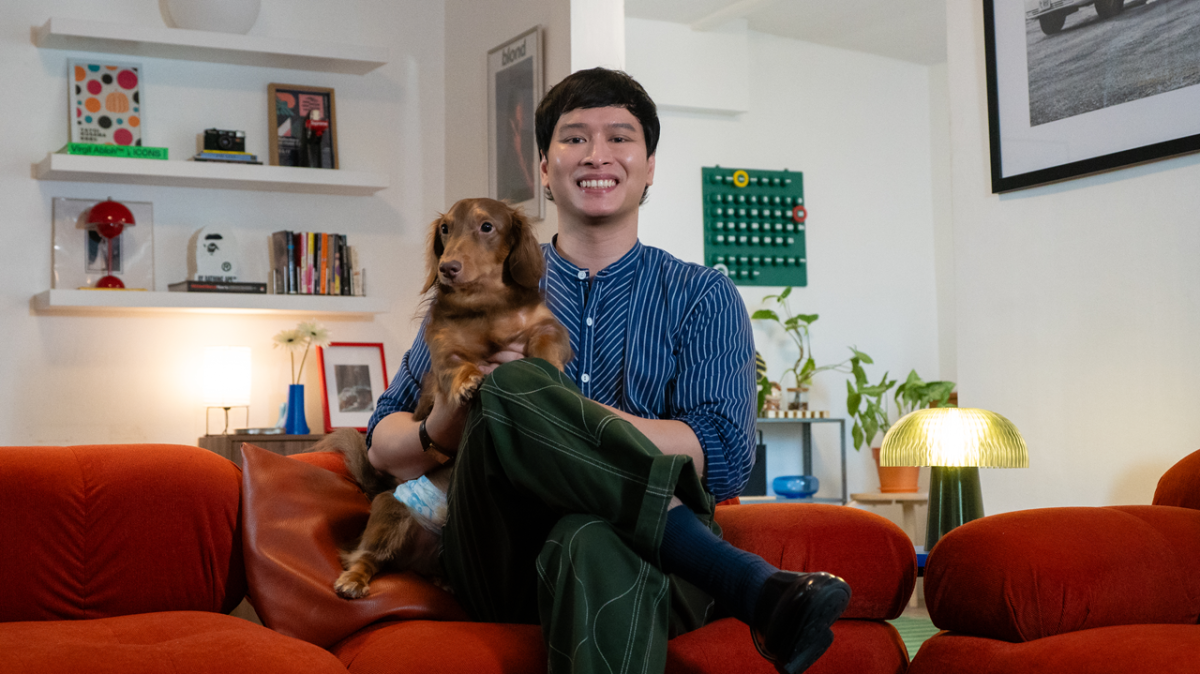
For Paolo Salgado, brand design work is more than just creating a catchy logo
The founder and creative director of Agape Design Studio sees relationship-building as an essential component of building a strong branding
By September Grace Mahino
October 10, 2025
In 2011, social entrepreneur Dan Pallotta wrote, “Brand is everything, and everything is brand” in a Harvard Business Review article. He posited that each business, whether they’re aware of it or not, already has a brand due to the mere fact that they exist, because branding isn’t just about having a brand name, logo, and other visuals. Rather, it’s the totality of how a company presents itself at every level and in every detail of its interactions with its customers. “The question is whether or not [the brand you have is] the brand you really want,” Pallotta concluded.
Filipino creative Paolo Salgado was fresh out of college and working as a graphic designer at the time the article was published. Within five short years, however, he was putting up his own agency, Agape Design Studio, and helping clients understand why branding is crucial in a saturated and highly competitive market. Since then, he and his business and life partner Angela have been working with clients to define, build, and strengthen their brands so they resonate with their respective target markets.
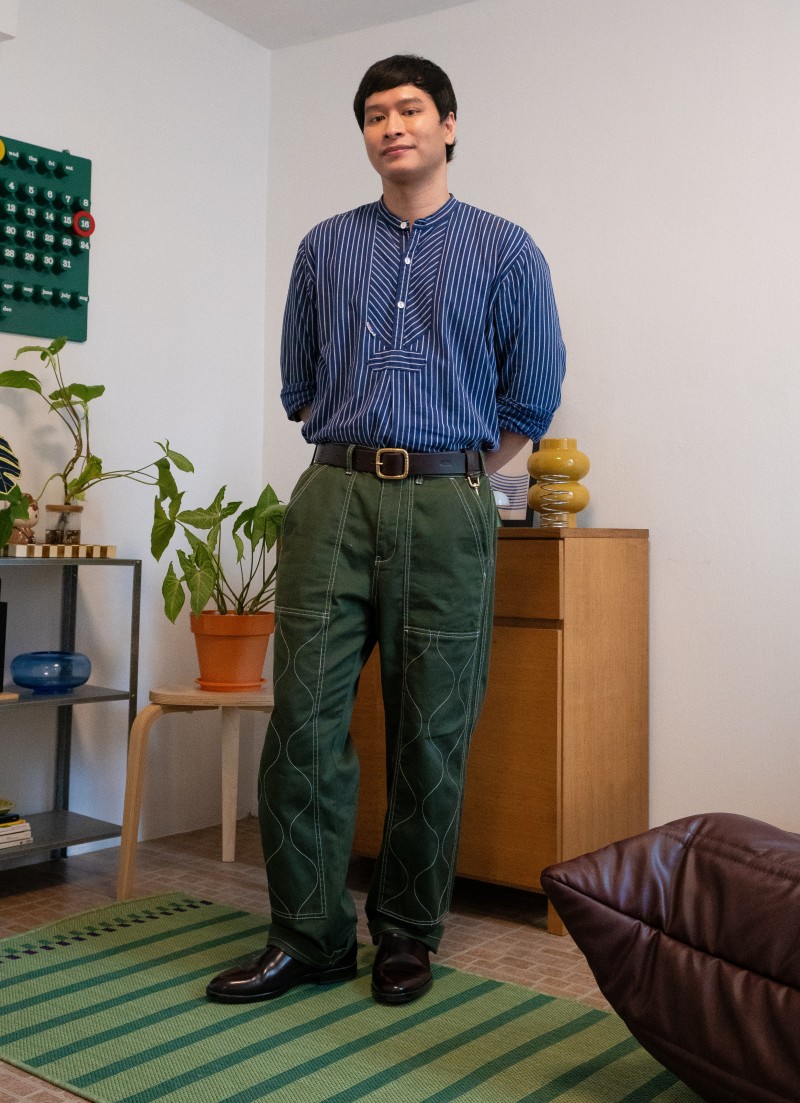
“Agape Design Studio is actually named after ‘God’s love,’” Salgado explained during CREATEPhilippines’ shoot at the warmly eclectic house that he and his wife have filled with lovingly and creatively upcycled furniture pieces, plus books, plants, toys, posters, and other tchotchkes found through their travels. “‘Agape’ means unconditional love,” he continued. “The reason why I decided to go with that name is to remind myself that when it comes to design, when it comes to branding, it’s not just about producing a quick output and declaring the work done. It’s about building a relationship with clients.”
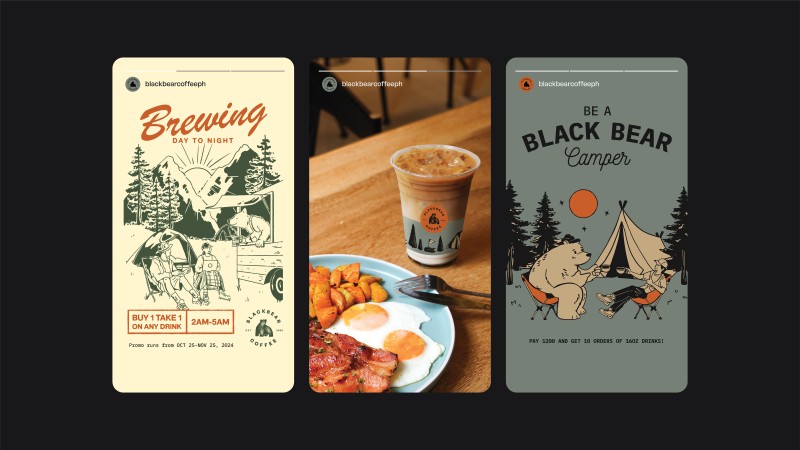
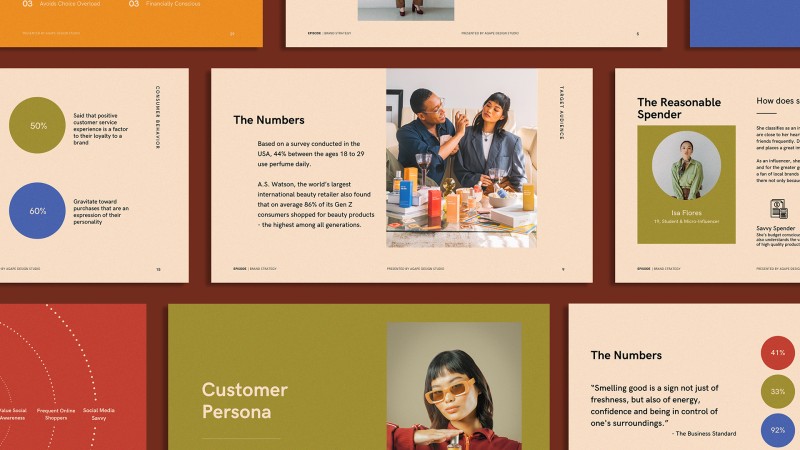
It has been nearly 10 years since Salgado started Agape, and the branding and social media agency’s portfolio now features both international and local businesses from across various industries. The variety allows him to integrate what he has picked up from working with different-sized enterprises and develop the best business practices for clients.
He’ll bring these practices and his branding design expertise to CREATELab at Manila FAME 2025, which happens on October 16 - 18 at the World Trade Center Metro Manila in Pasay City. As the onsite design clinic at the premier trade show for all things home, fashion, and lifestyle, CREATELab offers participating exhibitors free one-on-one consultations with brand design experts on how they can leverage great branding and design to enter and flourish in the global export scene. It is a collaboration between CREATEPhilippines and the Communication Design Association of the Philippines (CDAP), of which Salgado is a member. (CREATEPhilippines’ May Creative Feature, Dustin Carbonera, is currently the organization’s president.)
“Being part of CREATELab is a big opportunity for me,” Salgado said. “What I’m looking forward to the most is interacting with business owners and MSMEs, because it’s not every day that I get to have that chance.” Atypical of the usual biweekly client calls he does through his company, CREATELab will offer Salgado the experience of dedicating a full day to doing what he loves and does well: sitting down with clients to discuss brand strategy and design. “I’m imagining all of the people I would get to meet, all the businesses that I would get to help, and all of the business owners that I would also learn from. That’s just a huge honor.”
What first sparked your interest in design?
Actually, when I was young, I didn’t even know what graphic design was. Back then, I just wanted to become a comic book or a 3D artist. Then I read a magazine in 2006 that had a feature on Team Manila, and that was how I first learned about graphic design. I got very interested in the work Team Manila was doing, the really creative and unique designs that they made. Seeing their stuff convinced me to become a graphic designer, and that’s how I ended up pursuing multimedia arts at De La Salle - College of Saint Benilde.
It’s been nearly 10 years since then. At what point in your graphic design career did you realize that you wanted to expand into branding design?
The first-ever branding project that I took on was when I was already working as an art director. I loved the company I was with, as well as the actual work that we were doing, but I hated our branding. So I did my research, went to our creative director, and pitched the idea of doing a company rebrand; that was the first time ever that I did it.
[After my proposal was approved and implemented,] I saw the impact the rebrand had on the company, on how clients viewed us, on how we employees interacted with the environment—on how prouder we were to be representing the company. That was when I began to dream of not just working as a graphic designer but also doing branding design.
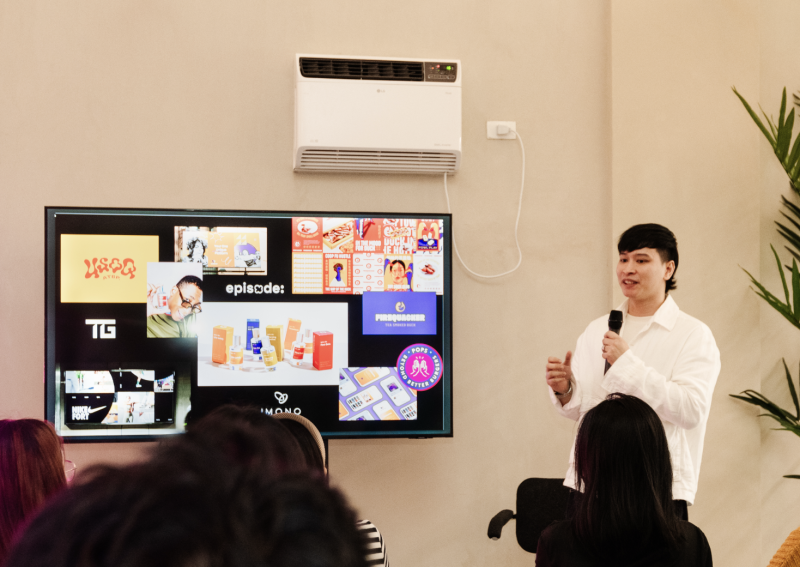
I really enjoy what it is able to create and the impact it has on a business. [After doing branding strategy for my old workplace,] I thought, “Might as well do it for other companies, too.” That way, I get to do the one thing that I enjoy, take pride in, and believe I’m good at.
Was that a distinct vision you had when founding Agape Design Studio, that you wanted to fill an industry gap that wasn’t being sufficiently addressed?
Honestly, I wasn't really trying to fulfill any gap in the market back then. [Founding my own agency] was just a way to fulfill a dream, because I’ve always admired local design studios; I keep up with the work that they do. It had long been my goal to have my own, even when I knew nothing about the business side of it and just wanted to be creative. I also believe that the best work is always done by smaller design studios, so I set out to put up my own.
But to answer the question, it was only after I had established Agape and worked a few years on it already that I understood the gap that we’ve actually been able to fill. When we began doing strategic brand positioning for clients, I realized, “Wait a minute, I don't have a positioning for my company.” When the studio was just starting out, I didn’t know the market I wanted to target; basically, Agape was targeting everyone. It was only around three or four years ago that I started strategizing our positioning—and it wasn't to fill a gap in the market. Well, maybe a little bit, but the approach was more of, How do we want to be known? And what do we really enjoy doing?
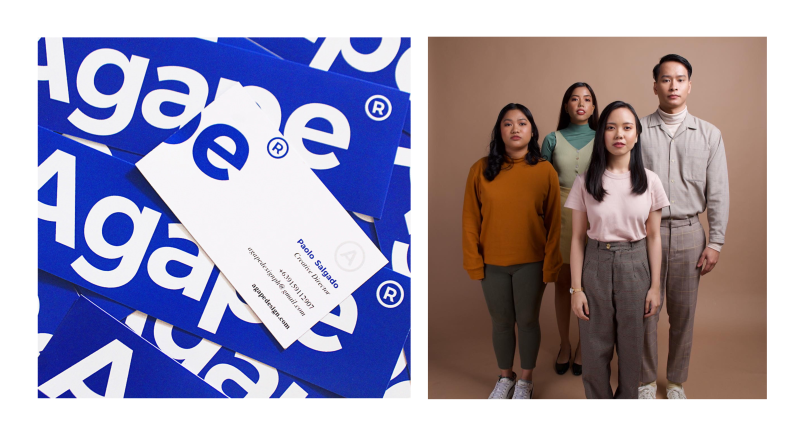
The answer is working with more local clients. I really enjoy seeing the impact of the work that we’re doing on them. Now, whenever I go out, I take pictures and videos of the branding design work we’ve done, even if it’s already the 10th time that I’ve seen it. I guess that’s the gap that the company is able to fill: serving smaller brands, smaller companies.
Wouldn’t you say, though, that branding isn’t always treated as an essential concern for businesses, especially small ones with limited budgets? How do you work around that?
Of course, branding is quite expensive for most clients because it takes a lot of time to develop—several months of hard work, in fact. But I found a way to restructure Agape’s services in a way that working with smaller brands won’t be a loss for us. It really is very fulfilling to see their founders happy. It’s always something I think about: What about smaller companies? [Because of budget concerns,] no one will offer them branding services.
Aside from financial resources, what are the differences you’ve encountered between working with small, independent brands versus large, international ones?
Before founding Agape, I was working more as a graphic designer then, later on, as an art director whenever I had a project with bigger, more established brands. I didn’t feel that I was as heavily involved as I would’ve wanted. Now that I get to work with more international or more established brands that have local teams [in the Philippines], I’ve seen how efficient their processes are.
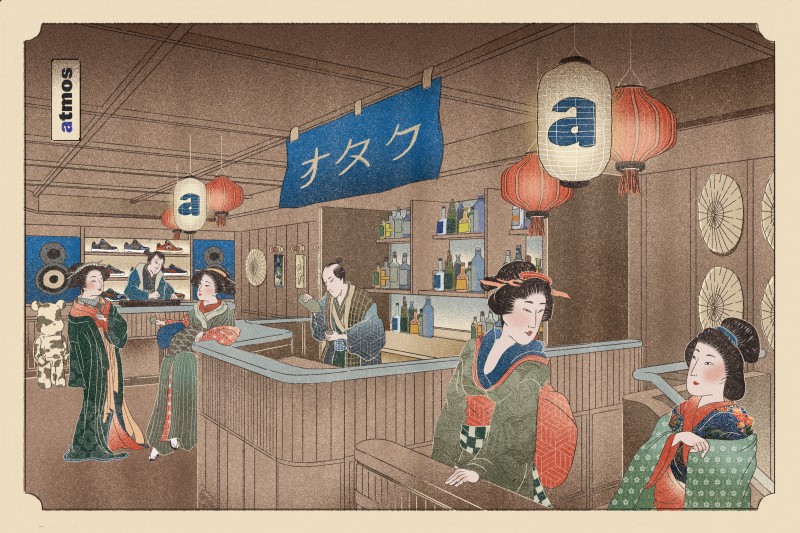
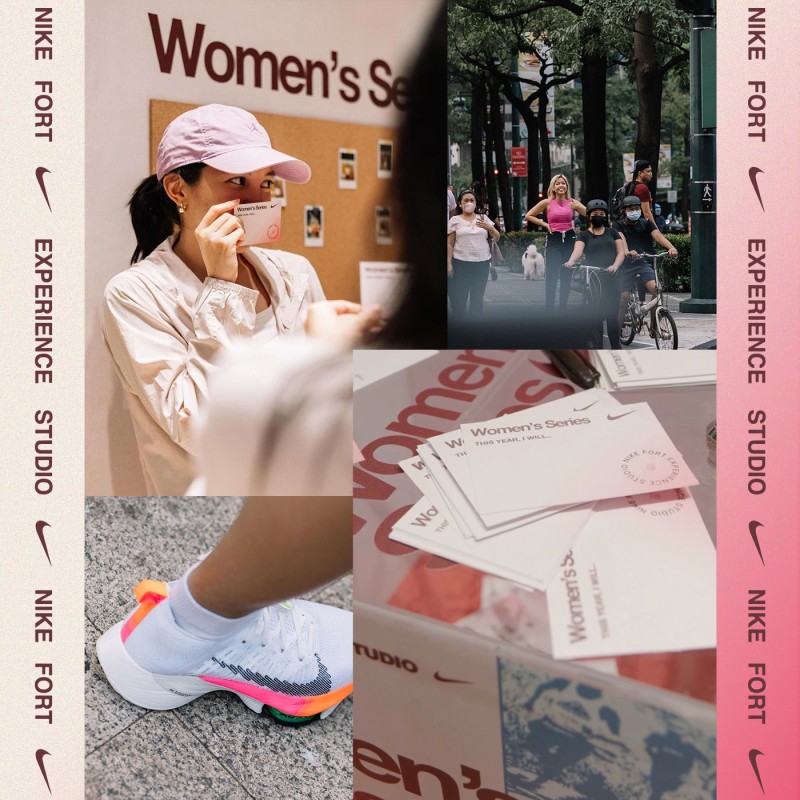
For example, with Nike, their approvals and their corporate communication processes are very efficient. I was used to discussing work only during meetings or through emails, but with a company as big as Nike, the deadlines are so tight that communication has to be made through direct messaging, even outside of work hours. Everything is so much faster [with them]. Through working with that company, I eventually became more comfortable with being under that kind of pressure—of communicating fast and clearly to cover all of the approval steps, from local to global. The experience taught me to be a more efficient communicator. That’s something I wasn’t good at before as a designer. I was just focused on the creation, the design—on being creative, in short. Now, I get to bring what I know about efficient communication whenever I work with any client.
What about smaller companies? What do you enjoy about working with them?
I enjoy that most of them come to us after they’ve already done their research and understand the style that we like to do. Smaller brands trust our vision and are very collaborative, and I try to bring that same energy when working with bigger brands.
Work is serious, but it’s also more casual when it’s with a small local brand. You get to be friends with them. We still keep it professional, of course, but I think it’s important to build rapport and get to know the people you’re working with as well. So if I can talk to them about things other than work, I form that connection with them. That way, I’m able to know more about the people I’m working with and pull inspiration from the things they like as well. The work becomes a lot more enjoyable that way.
It’s not just a transactional relationship of “You pay me, this is what I give you.”
Yes. I don’t like working [in a set-up] where I’m just a supplier and the client is the boss. I try to make it more collaborative, like we’re creating something together.

What qualities or values do you find to be common among the clients you’ve worked with, regardless of their size and their industry?
When I was just starting, I worked with clients from all walks of life, all kinds of people, all types of ages. But now, I find myself working a lot more with younger business owners. Probably 90% of the people inquiring with us are younger than I am. Whenever I go into meetings, I am surprised to meet 20-year-olds who are willing to allocate funds to hire a branding studio, who understand the importance of branding. That understanding is what’s common among the clients I work with now.
Does that make your work easier or more challenging?
Well, before, I would have to explain to a client what branding was. With discovery calls, the first part was always about explaining what branding is and why it’s important. Now, I don’t have to do that anymore because clients always come into the meeting knowing its importance. I’ve had several clients who come to me with branding as their first step in business. They don’t have anything yet: They don’t have a name, they don’t have a story, they don’t have a physical location, the product is not fully formed yet, but they already understand that branding is very important.
Working with people who don’t really have an understanding of branding requires walking them through the whole process, which I don’t mind. But often, it’s much better when they come in with a certain level of trust and knowledge already in what I do—not just branding, but design in general. Probably the 1% that’s a challenge when working with branding-savvy clients is that they also know a lot about design and aesthetics already, so they are more opinionated in those aspects. That can be challenging, though I personally like it.
For example, before, if you submitted a logo, a client would say it doesn’t feel right, or something equally vague. Now, since people are more in tune with what design is, we get very specific comments: “Can we change the angle of this logo a little bit so it’s more attuned to the mood board that we created?” It really feels like having a partner.
Based on your experiences, what do foreign corporations like about working with Filipino creatives and designers?
Personally, for me as a Filipino designer, our strength is not even something visual or a specific detail. I feel that a lot of international clients gravitate toward us because we like to go the extra mile. We understand the struggle that it takes to really be known in the creative industry and for our work to be respected.
Whenever I get clients—and I’ve also noticed this from other designer friends of mine or other people who run their own studios—we always give more than our best, from the quality of our output to our involvement in the whole process. I’m not saying it’s not the same with designers from other countries, but I’ve noticed that we Filipinos like to always give our best.
What can you advise companies that would love to work with a brand designer and strategist but can’t yet afford it? What can they do on their end to develop their brand?
If having a proper brand strategy—which should come before they do any identity design—can’t be part of the budget, then having a defined brand identity is good enough. That would be better than not having any at all. To be specific, it’s important to have a logo that’s timeless, that is easy to apply, and very scalable.
What’s crucial is to have a consistent brand identity all throughout, from product packaging to social media. There should be a consistent visual language, a consistent tone of voice. Whatever the touchpoint between a customer and your brand, it should always feel like you.
What legacy do you want to build for Agape Design Studio, and for yourself as well?
Well, we have clients whom we still work with to date, whom we’ve worked with since 2016, 2017. So, I would like Agape to be remembered for that: the relationship-building we do. It’s not just, “We’ll take your money, here are the brand guidelines, see you later, we hope your business does well.” I would like Agape to be remembered as a studio that also functions as a partner that clients can always trust and go back to.
I would sometimes get messages from clients asking about random things that don’t even involve branding. It’s just something related to their business, maybe an idea about a certain scent that they will be releasing, or something like that. That kind of connection is something I would like to be remembered for. More than just the design work we do, we want to be known for the relationships that we’ve built.
***
Are you a Manila FAME 2025 exhibitor and want to get a free design consultation through CREATELab? Register here to secure a slot.
Check out Agape Design Studio’s portfolio on its website. Find out more about Paolo Salgado through his Creatives Directory profile and follow him on Instagram. Banner image by Camille Dellosa.
Want to connect with Paolo? Get in touch with CREATEPhilippines by emailing us at [email protected]. Want to be part of our creative community and have the chance to be featured on CREATEPhilippines? Sign up and register for our Directory of Creatives here. Join our Viber community, too, and follow us on Instagram, Facebook, X, and LinkedIn to be updated on the creative events that we’re promoting.