

At Top Draw Animation, it takes a village to produce outstanding work
The animation studio combines Filipino artistry and the bayanihan sensibility to produce work that can be broadcast all over the globe
By September Grace Mahino
November 11, 2025
This is, perhaps, a universal childhood experience: parking in front of the TV on a Saturday morning, waiting for one’s favorite cartoons to start. For many creatives working in the animation industry, this was their “origin story,” so to speak, the spark that began their lifelong interest in the art form.
This was certainly the case for Top Draw Animation’s (TDA) Kristine Felipe, who grew up watching Sailor Moon, Dragon Ball Z, and other classic anime shows. Now, she’s an animation supervisor in the company, overseeing projects commissioned by clients from all over the world, such as Nickelodeon, Cartoon Network, and DreamWorks Animation. Through the past 12 years, Felipe has learned firsthand the amount of work involved in creating even just a single scene in an animation title and the kind of teamwork that every project calls for. “It has been a continuous learning process that I enjoy a lot,” she told CREATEPhilippines. “Working in animation is not just about having the talent for drawing. You also need [to develop] the right skills, because there are technicalities [you must learn to work] in animation.”
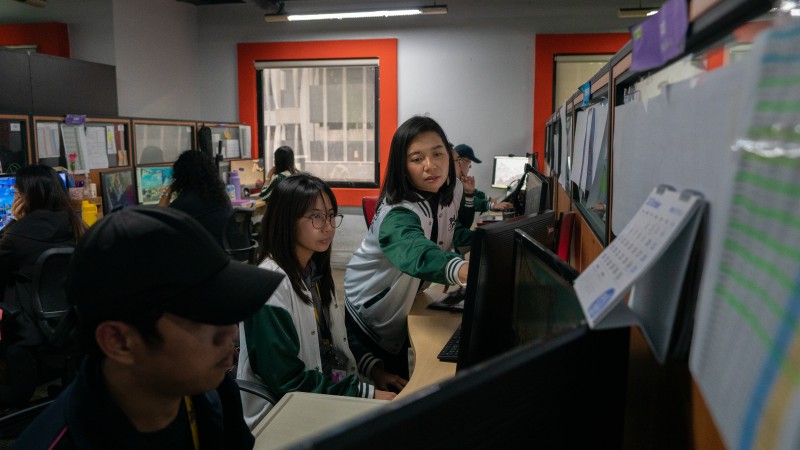
A production studio with more than 20 years under its belt, TDA understands that central to its success is its team members. It continuously upskills its talents through free training and workshops so they remain abreast of industry developments, not just in terms of animation software but also in the different illustration styles that appeal to a broad range of audiences.
It’s the kind of investment that has been powering the local animation industry. According to the Animation Council of the Philippines, Inc. (ACPI), the Philippine animation scene is projected to be worth US$141 million by 2028, making it a significant driver of economic activity and job creation in the country, as well as international collaborations that will finally, firmly put the Philippines on the global animation map. As of 2024, the local industry contributed approximately US$60 million in revenue to a US$413 billion-worth global animation market and employed over 7,500 professionals. As an industry insider, Felipe holds a similar positive outlook on the growth of Philippine animation: “It’s continuously growing, not just in terms of technology but also in getting projects and original works shown outside of the country.”
As a member of ACPI, TDA is part of that thriving, albeit still underappreciated, creative ecosystem that is long due for its time under the spotlight. After all, animation isn’t powered solely by imagination and technical skills. As TDA’s team members revealed, animating a single 11-minute episode for a cartoon show can take as much as 15 to 18 weeks’ worth of meticulous work across multiple departments, built on careful planning and executed with mastery.
With the annual Philippine animation festival Animahenasyon coming up, CREATEPhilippines drops by TDA’s headquarters in Pasig to get to know some of its members who play distinct and equally integral roles in bringing to life scenes from animated shows beloved by kids (and kids at heart) from all over the world.
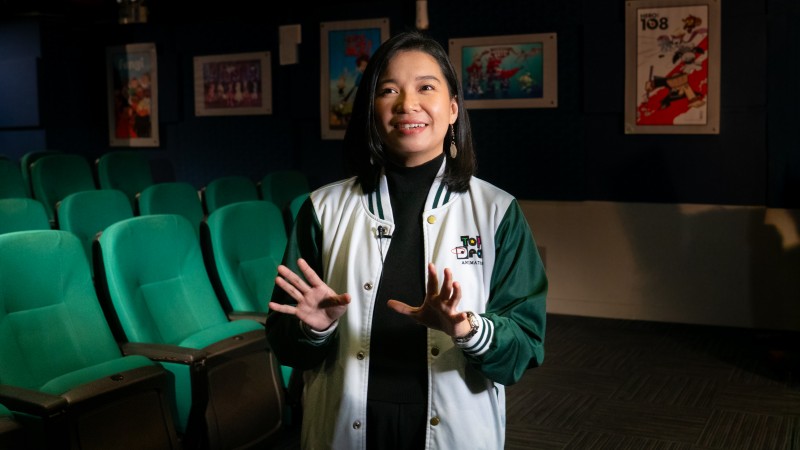
Nurturing next-gen animators: Kristine Felipe, animation supervisor
Could you describe your career path toward getting into animation?
It was a challenging one. I came from a different field—nursing—but I had also planned to study architecture in college. After passing the nursing board, I realized I should be working on something I like, because that’s what I’ll be doing for the rest of my life. That’s when I got into animation.
What was that shift like?
It hasn’t been a walk in the park, to be honest, but the animation industry experience for me has been overall colorful. Just like with any other career, it has its ups and downs. I was not really a gifted artist, but I was willing to learn, and I’m very, very thankful for the learning experiences I got from everyone here at TDA: my directors and supervisors, the production team, and my co-animators. I’m still learning, which I find enjoyable. There are courses now offering animation, which is very good. In my experience, I was able to learn animation processes and skills through free training here at TDA.
You’ve been with TDA for 12 years now, and the studio itself has been around for more than two decades. What do you think international animation studios enjoy the most about working with Filipinos?
There has been great feedback on Filipino talents from both international clients and local animation studios, because I believe we are globally competitive. We produce quality work that lives up to international standards and demands. We also have the edge in communication compared to other Asian countries. We understand foreign clients better and can thus cater to their needs better.
Aside from the quality of the work we produce, the camaraderie, the rapport we have built with clients keep them coming back. That is something vital, especially to us here at TDA. There are clients who just come in for one project and that’s it, but TDA is fortunate to have repeat clients.
In your role as an animation supervisor, you work closely with TDA animators. How does the studio ensure the growth of its creative talents in such a competitive field?
TDA has been producing quality animators for a long time because of the free training that we give to aspiring animators. We recently finished our holding drawing sessions, which are held seasonally just to help our animators keep track of their skills. There are also learning and upskilling programs for working with new software to keep everyone on track with industry changes.
What do you wish the audience would understand about the work that goes into animation?
We wish that people would realize that behind the animation that entertains them, behind the cartoons that kids from all over the world watch, is a very big team working on each episode, each scene. Sometimes, here at TDA, it takes 50 or more people to complete just one project. There are also different departments involved in the production process before an episode is actually released. It can be hard and tedious work, because there’s a process we have to follow. Animation is creative, but it’s a business at the same time. I hope people can appreciate the amount of work that goes into animating scenes. I hope they can appreciate not just the cartoons, not just the visuals, but the team that made them happen.
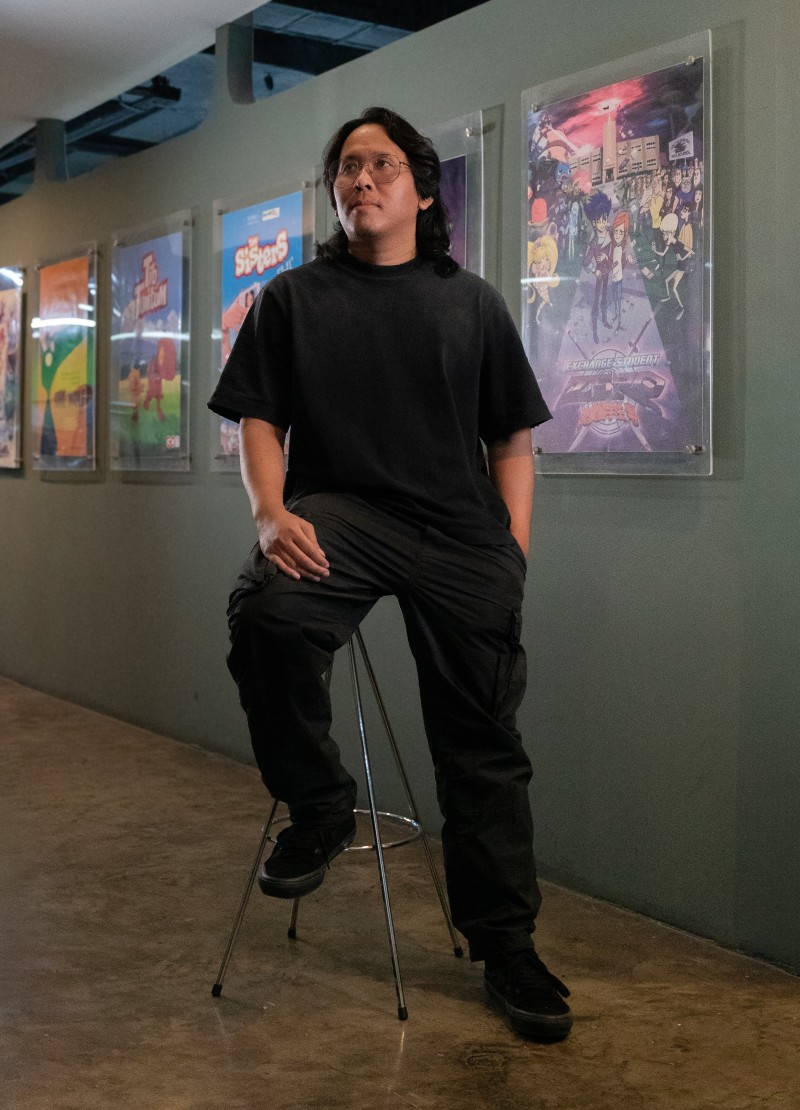
Mastery honed through persistence: Romeo Timbang, animator
You’ve been with TDA since 2008. What’s a crucial aspect of your job that most aspiring animators may not realize?
Planning before working on the scenes is crucial. By having a model sheet (a final design image that helps standardize the appearance, poses, and gestures of a character), animators can make their animations more design-accurate, because a golden rule in our industry is to always follow the model design. From there, we can expand on the character’s poses and animation, but always within the design’s scope. Even when an animator wants to apply their creativity, it should still always be within [the parameters of] the model sheet. That’s our reference, especially when we need to check the proportions and the consistency of the characters we’re drawing.
Speaking of applying your own creativity, how do you balance that with the set requirements for a project?
[Injecting my own creativity into assignments] depends on the client's requirements. I have to consider the demographics and the style of the animation I’m working on so that [any creative decisions I make] will always be appropriate. Sometimes, when we get into our creative vision, we forget the audience we’re targeting; we animators should be able to separate our own tastes from clients’ requirements.
For example, some shows are family-oriented while others are culture-based. You have to understand the requirements for each of these genres’ demographics so that what you make will cater appropriately to the genre’s viewers.
How do you refresh your imagination, then?
The easiest way for me to be inspired and be more competitive is by browsing through my co-animators’ works. It’s not only inspiring but is also a way of giving respect to my colleagues, of appreciating what they do. Seeing what they do well helps create a kind of holistic environment at work.
What’s a typical day at work for an animator, by the way?
A typical day? The first thing I do is to check the materials provided for the shots I’ll be working on. I then go ahead [to what I have lined up for the day]: I do the posing (or pose-to-pose process), based on the action provided by the storyboard, then submit that to the directors for evaluation. Once it’s approved, I proceed to animation; otherwise, I fix the issues the directors raised.
So let’s say I’m done with the animation. Just as with the posing process, I have to submit it to the director for evaluation. Approval follows if there are no more corrections, but the work won’t go back to me. It moves forward to looping, along with the other approved files. Editors will loop the animation, and then the files will get sent to the client for them to review scene by scene. If they notice mistakes, if there’s something missing, if they want to add something, they’ll return it back to the studio; that’s called retakes. The directors will distribute the scenes to the animators who made them for fixing, and it’s the same process again as with the posing and animation, repeated until the client is satisfied.
Sounds like a very tedious and meticulous process. What’s your favorite part of it?
What excites me the most is seeing the drawings moving. When you were a kid, you’d just see the final result of all that work on TV, but when you know you’re the one who did the animating, it’s thrilling. Having kids watch the shows I’ve worked on is also fun. It’s a source of pride to me as an animator: to have them recognize what you’re doing.
What’s the most challenging part of being an animator?
The challenging part is when clients give scenes with multiple moving characters; we call that a barangay. Those scenes take more time to finish. It’s also challenging whenever a client commissions specific and special drawings that are a bit complicated and stray a bit from the model sheet.
What do you like about working in TDA? And how do you see yourself growing within the company?
What sets TDA apart for me is the high level of professionalism in our workforce. The studio provides a safe environment so that we artists feel comfortable working. That’s why I see myself [continuing to] learn a lot with TDA, learning more animation tools.
If you could give a piece of advice to aspiring animators, what would you tell them?
My advice to the inspiring animators is to have patience, because you’d have to understand the craft and learn how to use the software involved in the trade. Let the experiences you gain give you wisdom.
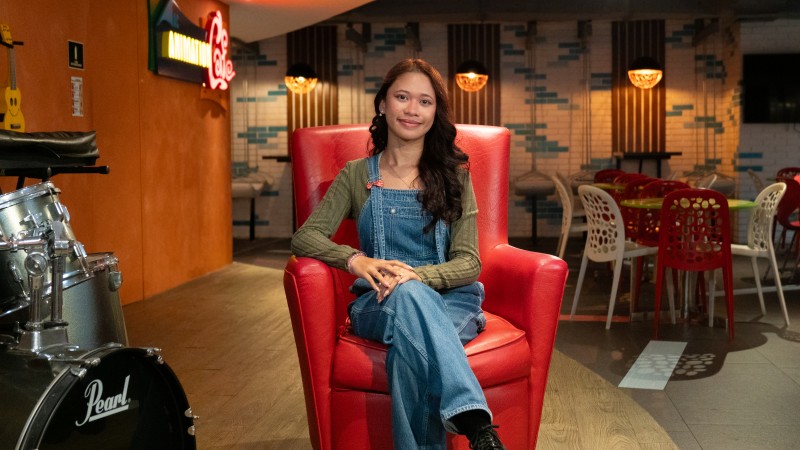
Learning on the job: La Arnie Tagana, production assistant
Working at TDA is your first full-time job. How has it been?
Honestly, it evokes a mix of excitement and nervousness. This is my first office job, aside from the freelance work I’ve done before, so I don't know a lot of things yet. I remember during my first day here at work, I posted an Instagram story where I had words from work that I didn’t understand floating around my head: “harmony,” “fix-ups,” “scenery take.” There is still a lot of jargon I’m not familiar with. But I’m also excited because I get to see the animators’ and compositors’ output every morning. I used to wait for cartoons and anime shows to come on TV every weekend, and now, I’m part of a company that makes them. That makes me happy.
What has working in TDA taught you about creativity and passion?
That creativity and passion aren’t just about making something. They also mean being patient. People in production management, like me, aren’t the ones animating the scenes. We’re the end-to-end [support] for the artists, the director, and the client, and that needs patience. We need to think about the people who are drawing and animating the episodes and scenes.
I specifically belong to the compositing department, which adds lighting, parallax scrolling, depth of field, and effects to the scenes. It’s not an easy process because there’s a lot to do. Even if I need to follow up on the submission of the scenes, I shouldn’t be pushy with the artists because, of course, they’re humans. I don’t want to transfer my work pressure on them because we’re a team.
In functioning as the production support for the compositing department, how do you ensure that you do a good job?
I always try to be organized. I also always make sure there’s clear communication within the team. I do that by checking the client’s deadline and then setting the compositors’ deadline a day or two before that. I ask the directors if they have specific questions for the client, and I also check in with the rest of the team if they’re missing files or if they’re having a hard time with their scenes. By being organized, I’m able to help team members avoid mistakes and lessen the last-minute rush.
What are the most exciting parts of the whole animation process for you? And what have you been the most proud of?
I enjoy the before and after shots for the compositing the most. Whenever I have free time, I watch an animated scene and then also watch as it goes through compositing. That’s how I came to understand the different roles each department in TDA plays. Animation is hard work, and compositing makes the scenes look better.
A proud moment for me was when a client posted about the premiere of a show we did. It was, like, wow! Our client posted our project; that means it’s official. It made everything we did and contributed to feel even more real.
How do you see yourself growing within TDA and in the animation industry in general?
I see myself maybe exploring and having a deeper understanding of the work done by the other departments here at TDA. I’ve been with the compositing department for one year now, and I’ve learned a lot already. I also know I still need to build more skills so I can eventually, hopefully, take on bigger roles and responsibilities.
If given a chance, I would love to work with major studios in the future. But I would say that I’m at home in TDA. Working here has formed my core and foundation, which I will take with me wherever I go in the industry.
***
Catch Animahenasyon 2025 on November 24-26, 2025, across multiple locations in the metro. Buy your tickets here.
Learn more about Top Draw Animation on their website. Photos by Camille Dellosa.
Want to connect with TDA? Get in touch by filling out the Connect with a Creative form. Want to be part of our creative community and have the chance to be featured on CREATEPhilippines? Sign up and register for our Directory of Creatives here. Join our Viber community, too, and follow us on Instagram, Facebook, X, and LinkedIn to be updated on the creative events that we’re promoting.